
Tyler Okonkwo, Staff Writer.
It’s 7:15 in the morning and the bathroom mirror is still fogged from the shower. On the shelf sits a lineup of half-used sticks and roll-ons, each one purchased because the last one stopped working by mid-afternoon. By the time the bus arrives, the collar already feels damp again, and the same question resurfaces that gets typed into search bars across the country every day: why doesn’t anything actually last?
The frustrating answer, most of the time, is that people are using a perfectly decent product the wrong way, at the wrong hour, for the wrong reason. One fact is worth knowing before anything else: sweat itself carries almost no odour. What shows up by early afternoon comes from bacteria on the skin breaking down proteins in perspiration, not from moisture on its own. Once that distinction is clear, the rest of the routine starts to make sense: what to buy, when to apply it, and how long to wait before deciding it isn’t working.
- Timing beats formula: applying antiperspirant at night, on dry skin, gives the active ingredient hours to work before sweat glands ramp up again in the morning.
- Odour and wetness are two separate problems: antiperspirants reduce moisture, deodorants target bacteria and smell, and knowing which one you actually need changes what you should be shopping for.
- Judging a product takes about two weeks, not one morning, because antiperspirant salts build a partial seal in the duct that strengthens with consistent nightly use.
What’s Actually Happening Under Your Arms
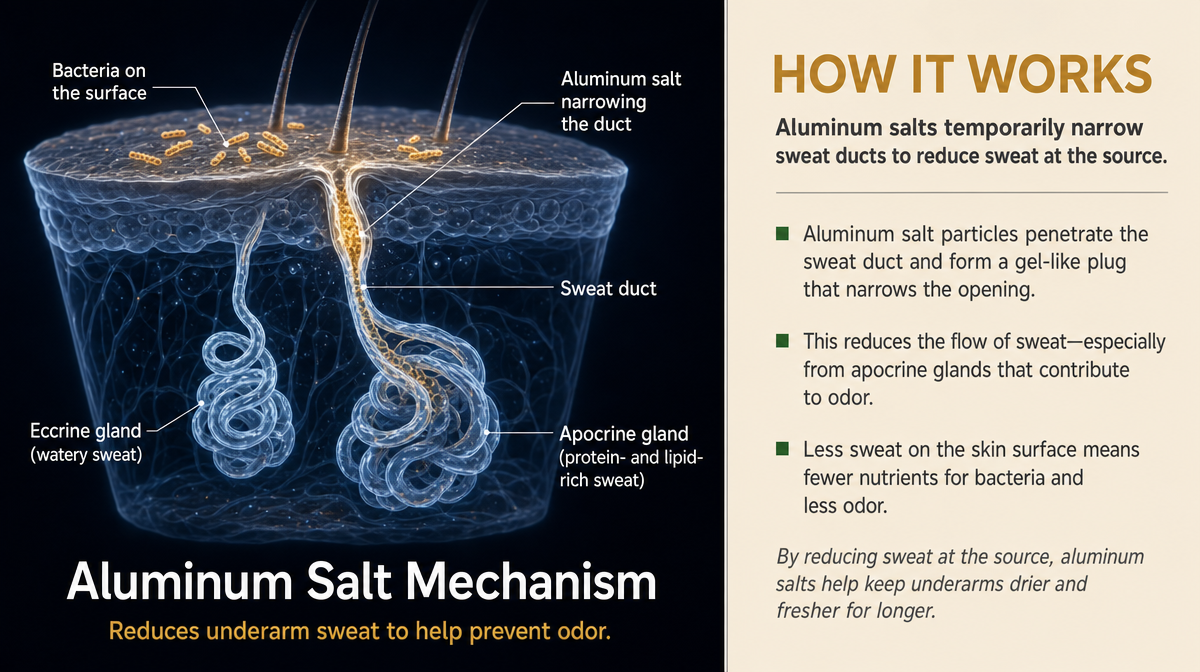
Underarm skin holds two kinds of sweat glands. Eccrine glands produce the thin, watery sweat used for cooling. Apocrine glands release a thicker fluid, and it’s this fluid that bacteria on the skin’s surface feed on. Think of a kitchen drain: clear water runs through without any smell, but let a bit of food residue sit in the pipe for a few hours and the bacteria go to work, and that’s when the odour starts. The apocrine secretion is the residue; the bacteria are doing the rest.
Antiperspirants work by temporarily narrowing the eccrine ducts with aluminum-based salts, which reduces how much moisture reaches the skin’s surface. Deodorants don’t touch sweat production at all. They work on the bacteria and the smell, usually through alcohol, fragrance or antimicrobial agents. A 2022 review in the International Journal of Cosmetic Science noted that aluminum chlorohydrate and aluminum zirconium compounds can reduce underarm perspiration by up to 20 to 30 percent under controlled testing conditions, though individual response varies with skin chemistry and activity level.
Deciding which mechanism you actually need, less moisture or less odour, is the first real decision in building a routine. It’s also the one most overflowing bathroom drawers have never made.
Antiperspirant Or Deodorant: Picking The Right Tool
People who sweat visibly through shirts by mid-morning usually need an antiperspirant, since the core issue is volume of moisture, not smell. People whose main complaint is odour rather than dampness may do just as well with a deodorant alone, particularly in cooler months or less physically demanding jobs.
Many drugstore formulas now combine both functions in a single stick, which covers most people most of the time. The Canadian Dermatology Association’s general public guidance notes that antiperspirants are regulated more closely than deodorants because they alter a bodily function, and that products labelled for “clinical strength” typically contain a higher concentration of aluminum compound, applied under similar directions to the standard version.
Natural or aluminum-free deodorants have grown popular in recent years, often built around baking soda, plant starches or charcoal to absorb moisture and neutralize odour. They can work well for people with lower sweat volume, but they don’t reduce perspiration itself, so someone who sweats heavily and switches to a natural formula expecting the same dryness is often disappointed for reasons that have nothing to do with the product’s quality.
The Nighttime Application Trick Most People Skip
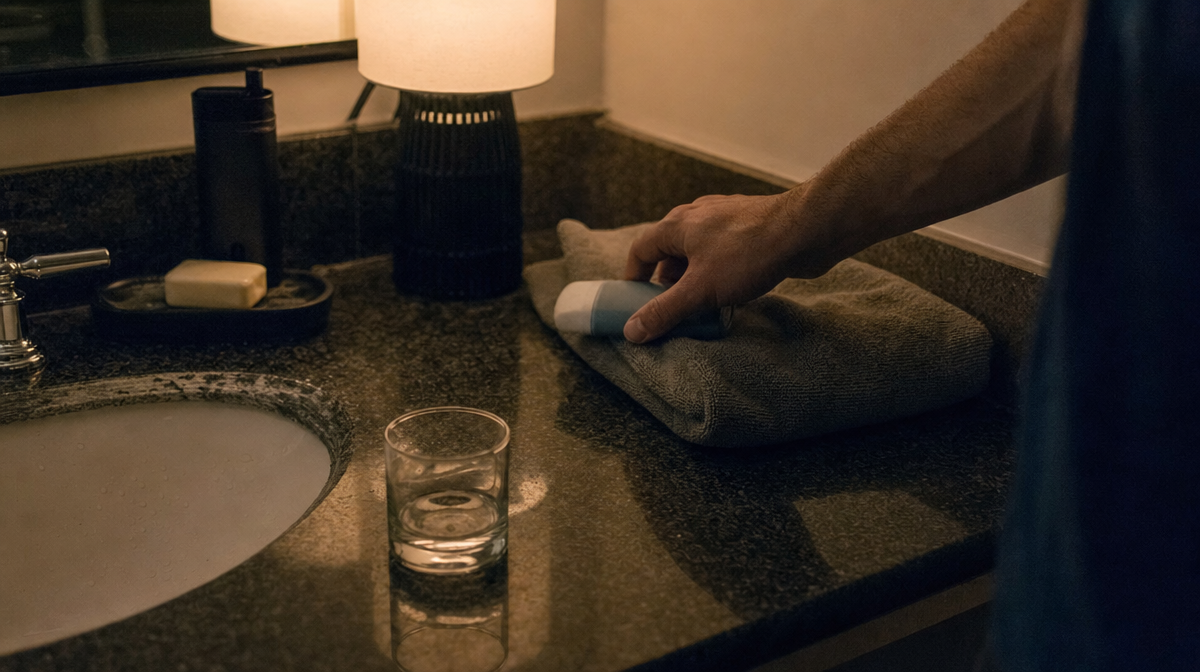
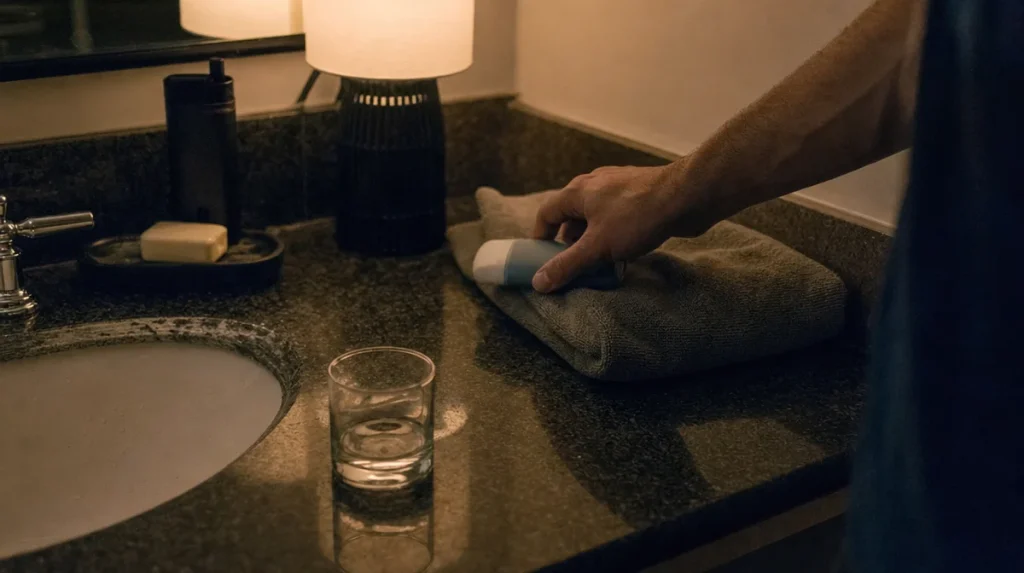
Sweat gland activity follows a daily rhythm, and it’s lowest overnight. Applying antiperspirant before bed, on completely dry skin, gives the aluminum salts several uninterrupted hours to work into the duct openings before the glands become active again in the morning.
It’s similar to sealing a driveway before rain is forecast rather than during the storm itself: the sealant needs time to set undisturbed to do its job properly. Apply the same product in the morning, right before getting dressed and moving around, and much of it gets wiped away by friction and a fresh layer of sweat before it has had time to settle in.
A short morning touch-up after showering is fine and doesn’t cancel out the nighttime application. What matters is that the primary dose happens when the skin is dry and still, not rushed and damp. Editors at Canadian Living have made similar observations in seasonal beauty coverage over the years: small timing changes often outperform switching products entirely.
Reading A Label Without Falling For The Marketing
Most of the meaningful information on an antiperspirant label is the percentage of active aluminum compound, usually aluminum chlorohydrate or aluminum zirconium tetrachlorohydrex gly, listed in the drug facts panel rather than the front-of-pack copy. Higher percentages generally correspond to stronger moisture reduction, within the ranges permitted for over-the-counter sale.
Terms like “detox,” “invisible technology” or “24-hour protection” are marketing language, not regulated claims, and they don’t map onto any standardized test a shopper can verify at the shelf. Fragrance-free doesn’t mean unscented in every case either; it can mean masking fragrances are used to neutralize the smell of other ingredients without adding a perceptible scent of their own.
Consumer-testing groups such as Protégez-Vous have periodically compared personal care products on measurable criteria rather than marketing copy, a useful reminder that the packaging front and the ingredient panel are often written by different departments with different goals.
The Three Mistakes That Undo A Good Product
The first mistake is applying to damp or freshly showered skin. Moisture on the surface dilutes the product and can also cause the aluminum salts to interact with water before they reach the duct, reducing effectiveness.
The second is applying immediately after shaving. Freshly shaved skin has micro-abrasions that make aluminum-based formulas sting and increases the odds of irritation, which then gets blamed on the product rather than the timing. Waiting even an hour after shaving makes a noticeable difference.
The third is switching products every few weeks chasing a fresher formula. Antiperspirant efficacy can build gradually with consistent use, and constant switching resets that process before it has a chance to show results. A stable routine, applied correctly, usually outperforms a rotating cabinet of half-tried options.
How Long To Wait Before Judging Results
One morning is not a fair trial. Because antiperspirant salts work by narrowing sweat ducts gradually with repeated nightly application, most dermatological guidance suggests giving a new routine at least one to two weeks of consistent use before deciding whether it’s working.
During that window, it helps to track two things separately: how damp clothing feels by early afternoon, and whether odour is noticeable by end of day. Since these are controlled by different mechanisms, a product might reduce wetness nicely while doing very little for smell, and that’s a sign to look at ingredients that target bacteria specifically, such as certain antimicrobial agents, rather than assuming the whole product has failed.
Hot weather, physical activity level and stress all affect sweat volume independently of any product, so comparing a summer week to a quiet week at a desk isn’t a fair test of the formula itself.
When Skin Pushes Back: Irritation And Sensitivity
Redness, itching or a rash under the arms after switching products is common enough that it has a name in dermatology circles: contact irritation, distinct from a true allergy. Aluminum salts are one frequent trigger, but so is baking soda in some natural formulas, which can be too alkaline for sensitive underarm skin and cause a burning sensation after a few days of use.
A simple patch test helps before committing to a new product on both underarms: apply a small amount to the inner forearm for three consecutive nights and watch for redness or itching before moving it to the underarm area. The Canadian Dermatology Association’s general public guidance recommends this kind of patch testing for any new personal care product applied to sensitive skin, not antiperspirants specifically, but the principle holds.
If irritation persists past a week of testing, or if a rash spreads rather than staying localized, that’s a signal to stop and speak with a health care provider rather than trying to push through it with a different scent of the same formula.
A Two-Week Self-Test You Can Run At Home
Pick one product, ideally one you already own, and commit to it fully for fourteen days rather than sampling several at once. Apply it at night on clean, dry skin, and add a light morning touch-up if you like.
Keep a short daily note, even one line: how the underarm felt by midday, whether clothing showed any dampness by late afternoon, and whether odour was noticeable by evening. After a week, patterns usually start to show. After two, you’ll have a genuine read on whether the formula suits your skin and your activity level, rather than a snap judgment based on one hot commute.
If the results are still inconsistent after two weeks of correct nightly application, the issue is more likely the formula’s aluminum concentration or your own sweat volume than anything about your technique, and that’s useful information for choosing what to try next.
Key Takeaways
A workable routine comes down to three things: knowing whether the real problem is wetness or odour, applying at night rather than in the rush of morning, and giving any single product a full two weeks before judging it. Most of the frustration people describe at the bathroom mirror traces back to timing, not to a fundamentally wrong product sitting on the shelf.
Your At-a-Glance Checklist
- Identify whether you’re managing moisture, odour, or both, before choosing a formula
- Apply the primary dose at night on clean, dry skin
- Wait at least an hour after shaving before applying
- Patch test new formulas on the inner forearm for three nights first
- Give any new product a full two weeks of consistent nightly use before judging it
- Track midday dampness and evening odour separately in a short daily note
- See a health care provider if irritation persists or spreads past a week
This article is general information and does not replace individual advice from a health care provider.
Individual results vary depending on skin type, activity level and product formulation.