
Geneviève Fortin, Staff Writer.
There is a specific kind of frustration that happens around two in the afternoon: you catch your reflection in an elevator door and the lipstick you carefully applied at eight is gone from the centre of your lower lip, gathered instead in a faint ring at the edges, or transferred wholesale onto a coffee cup you now have to wipe with a napkin in front of a client. Most women in this situation assume the product failed them. Often the technique failed the product. A long-wear formula is built around a resin or polymer film that needs specific conditions to set properly: a dry lip surface, a thin first layer, a beat of stillness before the second pass. Skip any of those and even a well-reviewed lipstick behaves like a cheap one. This guide walks through what actually determines wear time, so the tubes already sitting in your bag or your drawer perform the way they were designed to.
- Prep matters more than the formula itself: a dry, exfoliated lip surface can add hours of wear regardless of brand.
- Thin layers beat one heavy coat: long-wear pigments set by drying into a film, and a thick application cracks instead of bonding.
- Blotting at the right moment, not skipping it, locks in colour: a single blot between coats removes the wax carrier the film doesn’t need.
Why Long-wear Formulas Behave Differently From Regular Lipstick
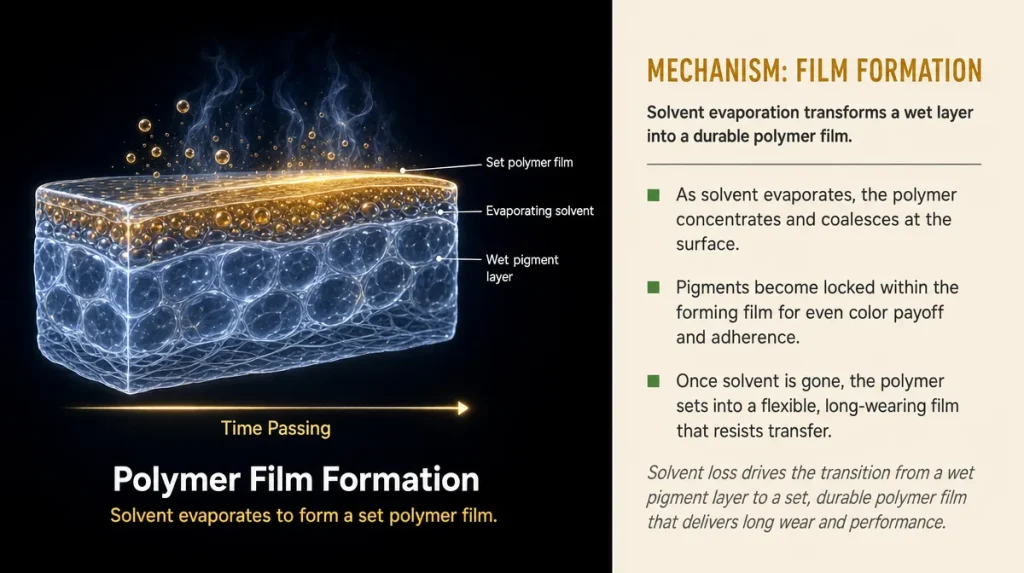
Ordinary lipstick sits on the lip in a soft, blendable film of wax and oil that transfers easily onto glasses and collars because it never fully hardens. Long-wear formulas are built to do the opposite: they carry a higher concentration of film-forming polymers, often silicone-based, suspended in a fast-evaporating solvent. As the solvent evaporates, the polymer sets into a thin, flexible skin that grips the lip rather than sliding off it.
Think of it the way you’d think about nail polish. A quick-dry top coat only works if you let each layer flash off before adding the next. Add a second coat too soon and the whole thing smears. The same chemistry governs long-wear lip colour: the drying stage is not a pause between steps, it is the step that makes the product work.
A 2021 review in the International Journal of Cosmetic Science described this film-forming mechanism in detail, noting that wear time is driven less by pigment load than by how completely the polymer layer is allowed to cure before contact with food, drink or friction. That single point explains most of the difference between a lipstick that survives lunch and one that does not.
Preparing The Lip Surface Before You Even Open The Tube
Long-wear formulas bond to the outer layer of skin, which means flaky or over-moisturized lips give the polymer a poor surface to grip. Lip skin has no oil glands of its own, so dead cells build up faster there than almost anywhere else on the face, and any long-wear product applied over that buildup will crack and flake along with it by mid-afternoon.
The fix is simple and takes under a minute. Use a soft washcloth or a dedicated lip scrub in small circles for about fifteen seconds, then wipe the lips completely dry. Damp lips are the most common reason a long-wear lipstick fails within the first hour: the polymer needs to bond to skin, not to a film of water or balm.
If lips are chronically dry, apply a hydrating balm ten to fifteen minutes before applying colour, then blot away any residue right before you start. The goal is a lip surface that feels smooth to the touch but has no visible shine or slip left on it. A quick self-test: press a dry tissue to your lips just before applying colour. If it comes away with any oily transfer, blot again.
Applying In Thin Layers Instead Of One Heavy Coat
The instinct with any lipstick is to swipe it on the way you would a balm: a few confident passes, done. Long-wear formulas punish that instinct. Because the colour needs to dry into a film, a thick application dries unevenly, cracking at the corners of the mouth first, since that’s where the lips flex most.
Apply one thin layer, covering the lip fully but without pressing hard. Let it sit for thirty to sixty seconds. You’ll feel it turn slightly tacky, almost matte, as the solvent evaporates. Only then apply a second thin layer if you want deeper colour. Two thin coats consistently outlast one thick one, even though they use less product overall.
A household comparison that holds up well: it’s the difference between painting a fence with one thick coat versus two thin ones. The thick coat looks fuller for the first hour, then peels. The thin coats take longer to apply but bond to the wood and to each other properly.
The Blotting Step Almost Everyone Skips
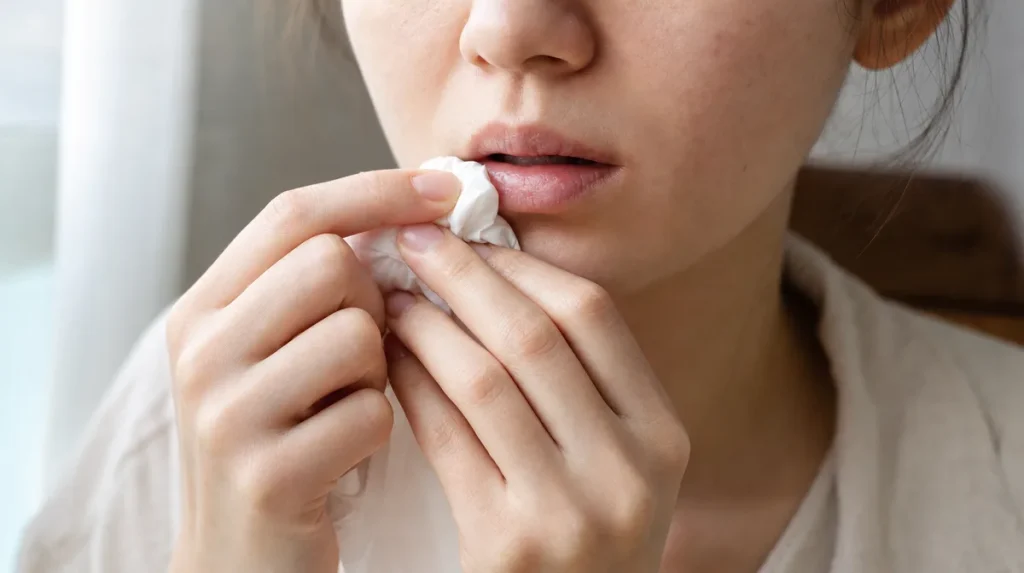
Many long-wear formulas are designed with a specific two-step ritual in mind: apply, blot with a single-ply tissue, then apply a second light layer. Skipping the blot is one of the most common reasons wear time falls short of what a formula is capable of.
The blot removes the waxy carrier that helped the pigment glide on smoothly but that the polymer film does not actually need once it has been transferred to the lip. Left in place, that excess wax stays soft and never fully sets, which is what rubs off onto cups and collars later in the day. Press a single-ply tissue against the lips for two to three seconds, just enough to lift the top layer without wiping. Then apply the final layer of colour and leave it alone.
A mistake worth naming here: rubbing the lips together after applying long-wear colour, the way one might with a balm to even it out. That motion disturbs the film before it has cured and is a common cause of premature patchiness, particularly at the centre of the lower lip where friction is highest.
Where The Outer Edge Fails First, And Why
If you’ve noticed colour disappearing specifically from the outer edge of the lower lip, or feathering into fine lines around the mouth, the cause is usually mechanical rather than chemical. The lip line is the area under the most repeated motion: talking, drinking, smiling. Polymer films are flexible but not infinitely so, and repeated flexing at that specific edge is where microscopic cracks start.
Lining the lips with a lip liner in a matching shade before applying colour gives that high-motion zone an extra layer of pigment to wear through before bare skin shows. It is a small step but a measurable one: liner acts as a base coat in the same sense that primer helps paint adhere to a wall with more give in it.
For lips with visible fine lines, a very thin layer of balm patted along the lip border, well outside the vermillion edge, before liner goes on can reduce feathering into those lines without affecting how the colour sets on the lip itself. Applying the same balm on the lip surface, however, undoes the drying step described earlier, so keep the two separate.
What Actually Causes Transfer Onto Cups, Masks And Collars
Transfer happens when the polymer film has not finished curing at the moment it meets another surface, or when too much product sits above the film in a layer that never set at all. Eating or drinking within the first two minutes of application is the single biggest cause of early transfer, according to formulation notes published by several cosmetic chemists describing film-forming lip technology.
The practical fix is patience rather than product. Apply colour a few minutes before you actually need to eat or drink, not immediately before. If time is tight, drink through a straw positioned toward the back of the mouth for the first sip, which avoids direct contact with the lip line while the film finishes setting.
Mask wear presents its own version of this problem: constant fabric friction against a curing film can lift pigment the way a cloth lifts wet paint. Letting the lipstick set for a full five minutes before putting on a mask, rather than immediately after application, noticeably reduces the amount of colour left on the inside of the fabric.
Reviving A Long-wear Lipstick That Has Gone Patchy By Afternoon
Long-wear formulas are not designed to be topped up the way a gloss is. Adding fresh colour directly over a partially worn, patchy layer usually looks worse, because the new product sits unevenly over the old cracked film rather than blending into it.
The more reliable touch-up method is to remove what remains first. A cotton swab dipped in a small amount of micellar water or gentle makeup remover, run lightly along the lip, lifts the old film cleanly without needing a full face of remover. Pat the lip dry, then reapply using the same thin-layer, blot, thin-layer method from the start.
This takes closer to ninety seconds than the ten-second swipe most people attempt, but it produces a touch-up that behaves like a fresh application rather than a patch job sitting on top of a failing one. A quick judge of whether a touch-up is needed at all: if colour has faded evenly across the whole lip, a light layer directly on top can work. If it has gone patchy in specific spots, remove and start over.
What Matters, And What Is Mostly Marketing Language
Wear-time claims on packaging are typically generated under laboratory conditions that do not involve eating, drinking or talking, so a stated number of hours should be read as a ceiling under ideal conditions rather than a guarantee. What genuinely predicts real-world performance is closer to what’s described above: lip prep, layering, blotting and the first few minutes after application.
Ingredient lists advertising newer polymer technologies are not meaningless, but the Canadian Dermatology Association’s general public guidance on lip care notes that formulation differences matter less for comfort and wear than individual skin condition and application habit, a point echoed across most consumer beauty testing over the years. In other words, the tube matters less than what happens in the sixty seconds after you open it.
A reasonable rule of thumb when comparing products in future: judge wear time against your own routine, not against the number on the box. Two coats with a blot in between, tested during an ordinary day of talking and drinking coffee, tells you more than any laboratory hour count.
Key Takeaways
Long-wear performance comes down to a short list of habits rather than a specific brand or price point. Dry, exfoliated lips give the polymer film something to bond to. Thin layers, applied one at a time with a pause between them, cure properly instead of cracking. A single blot between coats removes the excess wax the film does not need. Waiting a few minutes before eating or drinking lets the film finish setting. And a failing touch-up should start with removal, not another layer piled on top.
A Quick Pre-application Checklist
- Wipe or gently exfoliate lips, then dry completely
- Apply one thin layer of colour and wait thirty to sixty seconds
- Blot once with a single-ply tissue
- Apply a second thin layer if deeper colour is wanted
- Line the outer edge for extra wear where feathering usually starts
- Wait a few minutes before eating, drinking or putting on a mask
- If touch-ups are needed, remove patchy colour before reapplying
This article is general information and does not replace advice from a dermatologist or cosmetic professional.
Individual results with any technique may vary depending on lip condition and product formulation.